
The chrome-plated dreams of automobile manufacturers have danced across exhibition floors for over a century, each decade bringing revolutionary approaches to capturing the imagination of potential buyers. From the earliest days when cars were displayed like fine furniture in department stores to today’s immersive digital experiences that transport visitors into virtual driving scenarios, the evolution of automotive displays reflects not just changing technology but shifting cultural values and consumer expectations. The journey through automotive exhibition history reveals a fascinating narrative of human ingenuity, marketing psychology, and the relentless pursuit of creating emotional connections between steel, glass, and the human heart.
From Static Monuments to Living Experiences
The earliest automotive exhibitions bore little resemblance to today’s spectacular showcases. In the 1920s and 1930s, automobiles were presented as static monuments to industrial achievement, positioned on simple platforms with minimal contextual elements. These early displays emphasized craftsmanship and mechanical precision, reflecting an era when automobiles were luxury items purchased by a select few. The presentation style mirrored fine art exhibitions, with vehicles treated as sculptural objects worthy of contemplation rather than interaction.
The post-war boom of the 1950s marked the beginning of a transformation that would fundamentally change how automobiles were presented to the public. Display designers began incorporating lifestyle elements that suggested how ownership of a particular vehicle could enhance one’s social status and personal image. Artificial environments began appearing around vehicles, from suburban driveways complete with white picket fences to exotic locations that promised adventure and escape. This shift from product-focused to lifestyle-oriented displays represented a crucial evolution in automotive marketing philosophy.
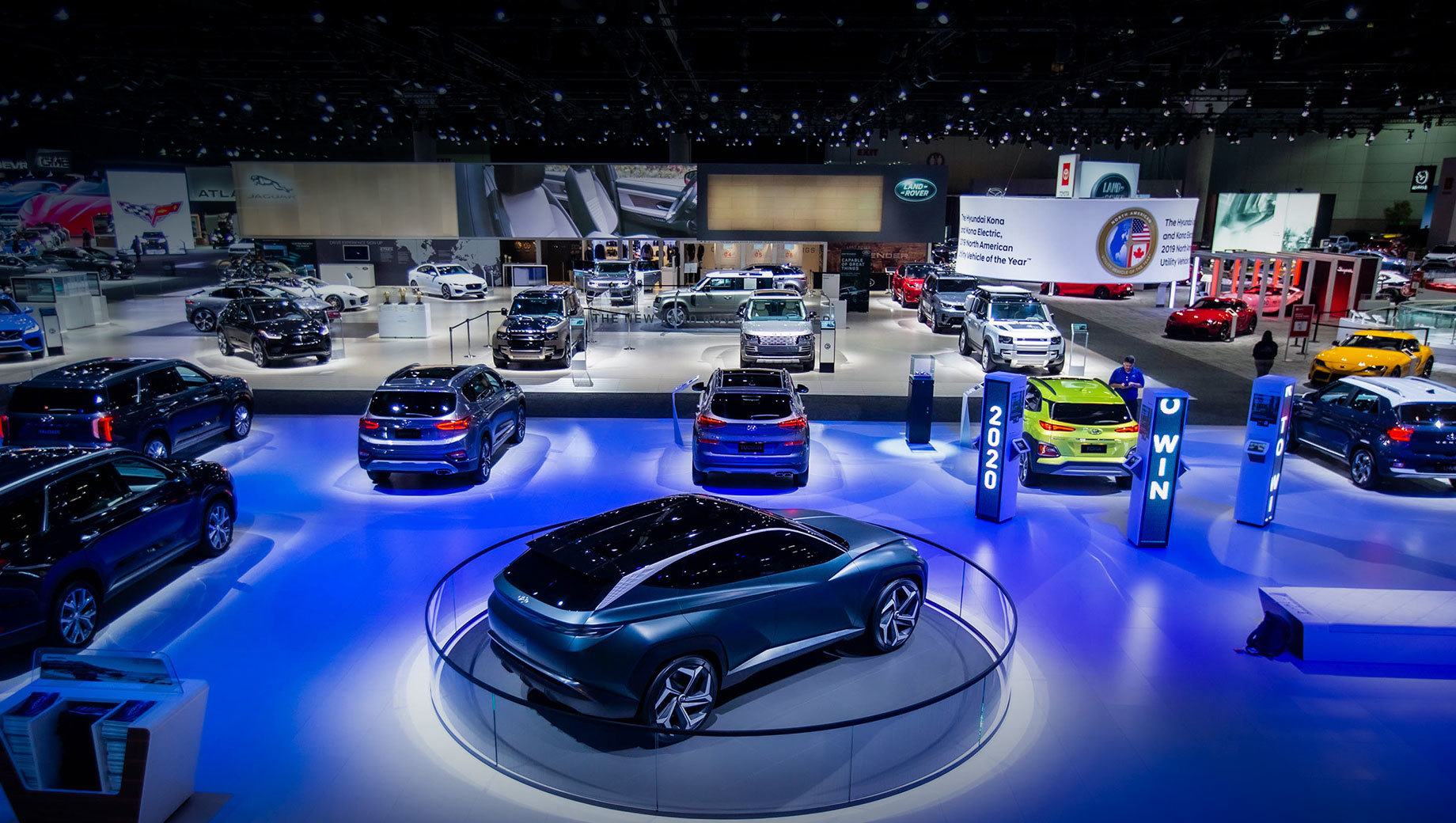
The 1960s brought the first experiments with kinetic displays, where vehicles were presented in motion or positioned to suggest movement. Rotating platforms became common, allowing visitors to view cars from multiple angles without walking around them. Some exhibitions featured vehicles positioned on simulated roads or ramps, creating the illusion of motion even when stationary. These innovations recognized that automobiles were fundamentally about movement and freedom, concepts that static displays could never fully capture.
Environmental Storytelling Through Spatial Design
The 1970s introduced the concept of environmental storytelling to automotive exhibitions, where entire spaces were designed to communicate brand values and vehicle capabilities. Rather than simply displaying cars, manufacturers began creating immersive environments that told stories about performance, reliability, and lifestyle aspirations. Desert landscapes surrounded rugged vehicles, while urban nightscapes provided backdrops for luxury sedans. These environments served as three-dimensional advertisements that engaged multiple senses simultaneously.
The attention to atmospheric details during this era created exhibitions that functioned as theatrical experiences. Lighting design became crucial, with different areas of displays featuring carefully orchestrated illumination that highlighted vehicle features while creating mood and atmosphere. Sound design emerged as an important element, with ambient audio ranging from engine sounds to environmental acoustics that reinforced the visual storytelling. These multisensory approaches recognized that purchasing decisions were emotional rather than purely rational.
The integration of human elements into automotive displays during the late 1970s and early 1980s brought a new dimension to exhibition design. Rather than featuring empty vehicles, displays began incorporating scenarios with people, whether through photography, mannequins, or live demonstrations. These human elements helped visitors visualize themselves in the vehicles, creating personal connections that pure product displays could never achieve. The psychology of aspiration became a driving force in display design.
Technological Amplification of the Automotive Dream
The 1980s and 1990s witnessed the first integration of electronic technology into automotive displays, fundamentally changing how information was presented to visitors. Interactive kiosks allowed potential customers to explore vehicle features, compare specifications, and even configure their ideal vehicles. These early digital interfaces represented a shift from passive observation to active engagement, acknowledging that modern consumers wanted to participate in the discovery process rather than simply receive information.
The video revolution of the 1980s brought dynamic visual elements to automotive displays that were previously impossible to achieve. Large-screen displays could show vehicles in action, demonstrating performance capabilities that static displays could never convey. Promotional videos became integral parts of exhibitions, featuring dramatic driving sequences, manufacturing processes, and lifestyle scenarios that positioned vehicles within broader cultural contexts. This video integration marked the beginning of the multimedia approach that would define future automotive exhibitions.
The rise of computer-generated imagery in the 1990s opened new possibilities for automotive displays that transcended physical limitations. Virtual environments could showcase vehicles in scenarios that would be impossible or impractical to create physically. Computer animations could demonstrate internal mechanical processes, safety features, and performance characteristics in ways that traditional displays could never achieve. This technological capability began blurring the lines between reality and simulation in automotive exhibitions.
Sensory Immersion and Emotional Engagement
The turn of the millennium brought unprecedented sophistication to automotive display design, with exhibitions that engaged all five senses. Manufacturers recognized that the decision to purchase a vehicle was deeply emotional, requiring displays that could create powerful sensory experiences. The smell of leather interiors was artificially generated and dispersed throughout display areas, while tactile elements allowed visitors to experience material quality and craftsmanship firsthand.
The concept of experiential marketing revolutionized automotive exhibitions during the early 2000s. Rather than simply viewing vehicles, visitors could participate in simulated driving experiences, virtual test drives, and interactive demonstrations of vehicle features. These experiential elements transformed exhibitions from product showcases into entertainment destinations where the line between marketing and entertainment became increasingly blurred. The success of these immersive experiences demonstrated that engagement was more valuable than information delivery.
The integration of personal technology into automotive displays created new opportunities for customized experiences. Visitors could use their smartphones to access additional information, participate in augmented reality experiences, or even schedule real-world test drives. This personalization recognized that different visitors had different interests and information needs, requiring flexible display systems that could adapt to individual preferences and behaviors.
Digital Transformation and Virtual Reality
The 2010s marked a complete transformation of automotive exhibitions through digital technology integration. Virtual reality systems allowed visitors to experience vehicles in ways that physical displays could never provide. Potential customers could take virtual test drives on famous racetracks, explore vehicle interiors in minute detail, or even experience autonomous driving scenarios that demonstrated future capabilities. These virtual experiences expanded the possibilities for automotive exhibitions beyond physical limitations.
The rise of social media created new requirements for automotive displays that needed to be inherently shareable and photogenic. Exhibition designers began creating Instagram-worthy moments that would extend the reach of displays far beyond the physical exhibition space. Interactive elements were designed with social sharing in mind, creating viral marketing opportunities that amplified the impact of exhibitions through digital networks. The concept of exhibitions as media events rather than simply product showcases became central to design philosophy.
The integration of artificial intelligence and machine learning into automotive displays enabled personalized experiences that adapted to individual visitor behaviors and preferences. Smart displays could recognize returning visitors, remember their interests, and provide customized information and experiences. This personalization created more engaging and relevant experiences while providing valuable data about visitor preferences and behaviors that could inform future product development and marketing strategies.
Sustainability Narratives in Exhibition Design
The growing environmental consciousness of the 2010s and 2020s brought sustainability considerations to the forefront of automotive exhibition design. Displays began incorporating elements that demonstrated environmental responsibility, from recycled materials in construction to energy-efficient lighting systems. The presentation of electric and hybrid vehicles required new approaches that could communicate the benefits of sustainable transportation while maintaining the emotional appeal that had always been central to automotive marketing.
The challenge of presenting electric vehicles required innovative display techniques that could make the invisible visible. Interactive displays showed energy flows, battery technologies, and environmental impact comparisons in ways that made abstract concepts tangible and understandable. These educational elements represented a shift toward more informative exhibitions that acknowledged the technical sophistication of modern consumers while maintaining the emotional engagement that drives purchasing decisions.
The circular economy principles that began influencing automotive manufacturing also impacted exhibition design. Modular display systems that could be reconfigured for different events, sustainable materials that could be recycled after use, and energy-efficient technologies that reduced environmental impact became important considerations. These sustainability elements aligned exhibition practices with the environmental values that many automotive manufacturers were promoting through their products.
Augmented Reality and Mixed Reality Experiences
The emergence of augmented reality technology in automotive exhibitions created new possibilities for overlaying digital information onto physical vehicles. Visitors could use AR applications to see cutaway views of engines, visualize optional equipment, or explore vehicle features that would otherwise be invisible. This technology bridged the gap between physical and digital experiences, creating hybrid exhibitions that combined the tangible appeal of real vehicles with the informational richness of digital content.
The interactive exhibit setups that became common in the late 2010s and 2020s represented the culmination of decades of innovation in automotive display technology. These sophisticated installations combined physical vehicles with digital interfaces, virtual reality experiences, and real-time customization capabilities. Visitors could modify vehicle configurations and immediately see the results, both in digital simulations and on physical displays that adapted to their choices. These installations demonstrated how technology could enhance rather than replace the fundamental appeal of automobiles.
The integration of Internet of Things technology into automotive displays created connected experiences that extended beyond the exhibition space. Visitors could interact with vehicles that responded to their presence, provided personalized information, and even communicated with their personal devices. These connected experiences created continuity between exhibition visits and ongoing relationships with automotive brands, transforming exhibitions from discrete events into components of larger customer engagement strategies.
Predictive Analytics and Personalized Experiences
The application of big data analytics to automotive exhibitions enabled unprecedented insights into visitor behavior and preferences. Heat mapping technology could track visitor movement patterns, identifying which displays attracted the most attention and which areas were underutilized. This data-driven approach to exhibition design allowed for continuous optimization of layouts, content, and interactive elements based on actual visitor behavior rather than assumptions about what would be engaging.
The predictive capabilities of modern analytics systems enabled automotive exhibitions to anticipate visitor needs and preferences based on demographic data, previous interactions, and behavioral patterns. These predictive systems could suggest relevant vehicles, configure personalized experiences, and even predict the likelihood of purchase based on exhibition engagement patterns. This intelligence transformed exhibitions from passive displays into active sales tools that could adapt to individual prospects.
The integration of customer relationship management systems with exhibition technology created seamless transitions from exhibition interactions to ongoing customer relationships. Visitors’ exhibition experiences could be recorded and used to inform future communications, service interactions, and product recommendations. This integration recognized that exhibitions were not endpoints but rather beginnings of long-term customer relationships that required nurturing and development.
Future Horizons in Automotive Exhibition Design
The continued evolution of automotive exhibition design reflects broader changes in consumer behavior, technology capabilities, and cultural values. The rise of autonomous vehicles has created new challenges for exhibition designers who must communicate the benefits of technologies that remove human control from the driving experience. These future-focused displays must balance the traditional emotional appeal of automobiles with the practical benefits of autonomous transportation.
The sharing economy and changing attitudes toward vehicle ownership have influenced automotive exhibitions to focus more on mobility solutions than individual vehicle ownership. Displays increasingly emphasize transportation as a service rather than product ownership, requiring new approaches to creating emotional connections with mobility concepts rather than physical vehicles. This shift represents a fundamental change in how automotive exhibitions must function in the future.
The integration of smart city technologies and connected infrastructure into automotive exhibitions creates opportunities to demonstrate how vehicles fit into broader transportation ecosystems. These holistic approaches recognize that future mobility decisions will be made within complex networks of transportation options, requiring exhibitions that can communicate the role of individual vehicles within these larger systems.
Conclusion
The evolution of automotive show display innovations reveals a fascinating journey from simple product presentations to sophisticated experiential marketing platforms that engage multiple senses and create lasting emotional connections. Each decade has brought new technologies, changing consumer expectations, and evolving cultural values that have shaped how automobiles are presented to the public. The transformation from static displays to interactive experiences reflects not just technological advancement but a deeper understanding of human psychology and the emotional factors that drive purchasing decisions.
The future of automotive exhibitions will likely be shaped by continued technological innovation, changing mobility patterns, and evolving environmental consciousness. The challenge for exhibition designers will be to maintain the emotional appeal that has always been central to automotive marketing while adapting to new technologies and changing consumer values. The success of future exhibitions will depend on their ability to create meaningful connections between people and mobility solutions, whether those solutions involve traditional vehicle ownership or emerging forms of transportation services.
The legacy of automotive exhibition innovation extends beyond the automotive industry itself, influencing exhibition design across numerous sectors and contributing to our understanding of how physical and digital experiences can be combined to create powerful marketing communications. As we look toward the future, the lessons learned from decades of automotive exhibition evolution will continue to inform how we present complex products and services to consumers who demand engagement, personalization, and authentic experiences that respect both their intelligence and their emotions.