
In the precise world of surgical procedures, every instrument plays a critical role in ensuring a successful outcome. Among these essential tools are muscle clamps specialized devices designed to gently retract and hold muscle tissue away from the surgical field. Their function is fundamental to providing surgeons with clear visibility and access to underlying organs and structures, making complex operations safer and more efficient. Understanding the design, application, and variety of these instruments highlights the innovation driving modern medicine.
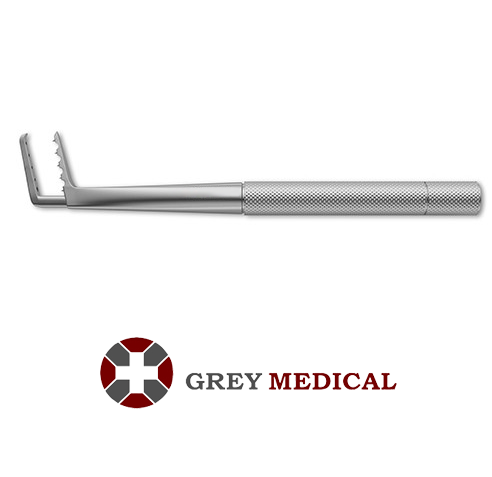
What Are Muscle Clamps and Why Are They Essential?
A muscle clamp is a type of surgical forceps specifically engineered for the delicate task of manipulating muscle tissue. Unlike hemostats designed to stop bleeding or tissue forceps used for grasping, muscle clamps are built to hold tissue securely without causing unnecessary trauma or damage. Their jaws often feature a non-crushing design, with serrations or fenestrations that provide a firm grip while distributing pressure evenly. This careful construction prevents bruising, tearing, or nerve damage, which is crucial for a patient’s smooth recovery.
The primary role of hysterectomy clamp is retraction. During an operation, muscles can obscure the surgeon’s view of the target area. By using muscle clamps, the surgical team can hold these tissues aside, creating an unobstructed operative field. This is particularly important in procedures involving the abdomen, chest, or deep within the limbs, where layers of muscle must be navigated to reach vital organs or bones. Without effective retraction, the risk of accidental injury to surrounding tissues would increase significantly, and the overall procedure would be far more challenging.
Exploring Different Types of Muscle Clamps
The field of surgery is diverse, and so are the tools used within it. Muscle clamps come in various shapes and sizes, each tailored for specific anatomical regions and surgical needs. The selection of the right clamp depends on the muscle’s size, the depth of the surgical site, and the amount of force required for retraction.
One common example is the Backhaus towel clamp, which, while often used for securing drapes, can also be adapted for grasping tough fascial tissue. More specific to muscle is the Lane twin clamp, which is designed to grasp and hold tissue on either side of an incision, providing excellent exposure. For larger, more powerful muscles, surgeons might opt for a tool like the Meyerding finger retractor, which allows for significant manual retraction with a broad, smooth surface to minimize tissue damage. Each design reflects a deep understanding of anatomy and the physical demands of surgery, ensuring the right tool is available for every unique situation.
The Role of Innovation in Surgical Instrument Design
The evolution of muscle clamps and other surgical instruments is a testament to the continuous drive for improvement in medical technology. Companies at the forefront of this innovation focus on creating tools that are not only effective but also enhance surgeon comfort and patient safety. Materials science has played a huge role, with the use of high-grade stainless steel and titanium alloys that offer durability, corrosion resistance, and the ability to withstand repeated sterilization cycles.
Ergonomics is another key area of innovation. Modern surgical instruments are designed to fit comfortably in the surgeon’s hand, reducing fatigue during long and complex procedures. The locking mechanisms, handle shapes, and overall balance of muscle clamps are meticulously engineered to provide optimal control and tactile feedback. This focus on human factors allows surgeons to perform with greater precision and confidence.
GreyMedical®, a privately owned medical technology company, exemplifies this commitment to progress. Dedicated to innovation and excellence in the craft of surgical instruments, GreyMedical® continually refines its designs to meet the evolving needs of the surgical community. By combining traditional craftsmanship with advanced engineering, they produce instruments that are reliable, precise, and help facilitate better patient outcomes.
Conclusion: The Unsung Heroes of the Operating Room
While they may not always be in the spotlight, muscle clamps are undeniably crucial to the success of countless surgical procedures. Their ability to gently and securely manage soft tissue provides surgeons with the clear access needed to perform their work with precision and care. The ongoing innovation in their design, championed by dedicated companies, ensures that these essential tools will continue to evolve, contributing to safer surgeries and faster patient recoveries.